
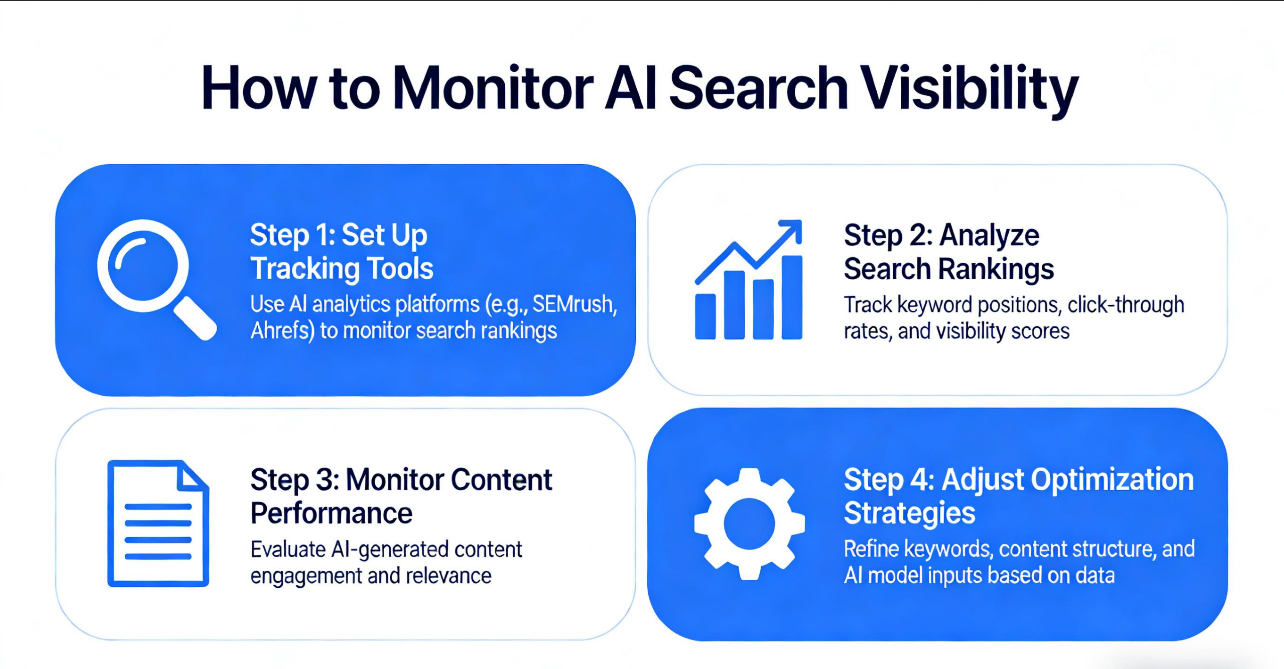
In the digital age, AI search engines are transforming how we access information. With the use of natural language processing (NLP) and machine learning, AI search ranking algorithms are becoming more intelligent, making monitoring AI search visibility crucial. This article briefly introduces how to monitor AI search visibility and increase content exposure.
1. Understand AI Search Algorithms
AI search engines use machine learning and natural language processing to understand user queries and continually optimize search results based on data. Unlike traditional search engines, AI search focuses more on user intent and interaction data. Therefore, understanding how these algorithms work, especially how they interpret queries, recommend relevant content, and personalize search results, is essential.
2. Use AI Analytics Tools
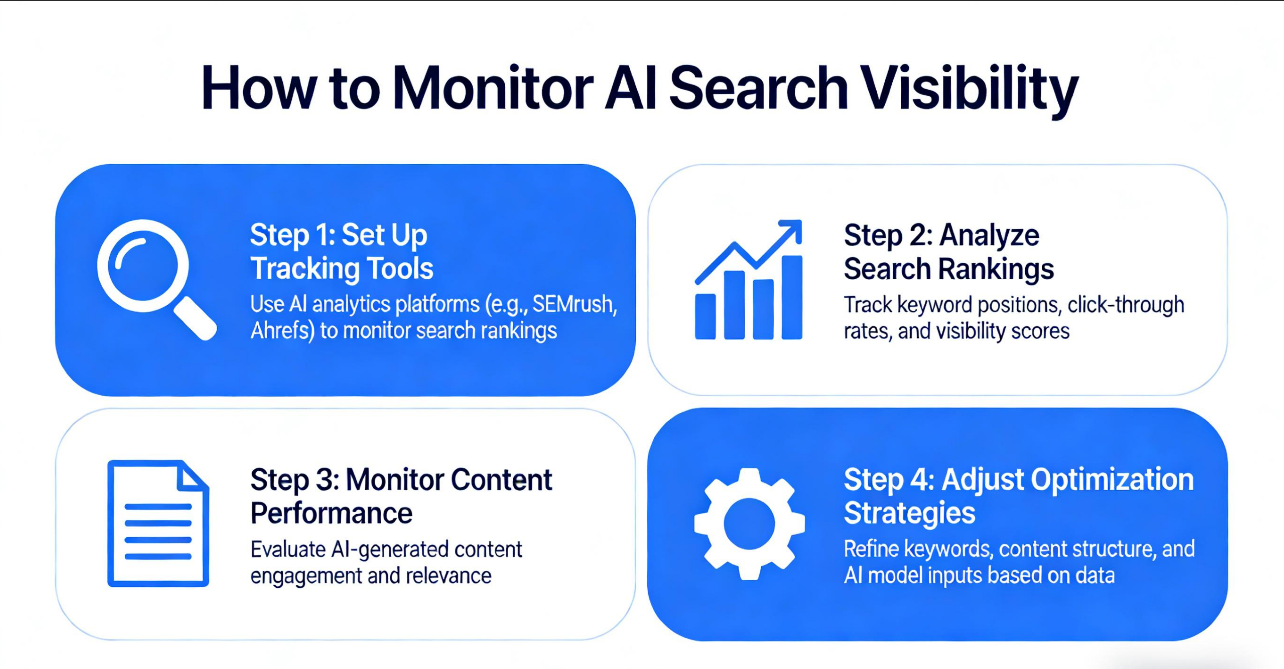
Several analytics tools can help track how content performs in AI search engines. These tools provide insights into metrics like click-through rate (CTR) and ranking, helping you understand content visibility. Common tools include:
Google Search Console: While not specifically designed for AI, it helps track performance in Google’s AI-based search.
AI-specific Monitoring Tools: Some tools are specialized in tracking trends and rankings in AI search engines.
Third-Party SEO Tools: Tools like SEMrush and Ahrefs also offer deep insights into search performance.
3. Focus on User Intent and Engagement
AI search engines prioritize user intent, moving beyond keyword matching. To improve AI search visibility, you need to create high-quality content that addresses user needs. This includes:
Using long-tail keywords: Helping AI better understand complex queries.
Providing high-quality content: Answering user questions with in-depth content.
Monitoring engagement metrics: Such as bounce rates and time on page to see if users are engaging.
4. Monitor Algorithm Updates and Trends
AI search engine algorithms are constantly evolving, so staying informed about updates and trends is key to optimizing search visibility. It’s recommended to:
Follow industry news: Stay updated on changes to search algorithms by major players like Google.
Join AI-focused forums: Engage with experts to discuss trends and adjust strategies accordingly.
5. Track Voice Search and Visual Search
AI search is expanding beyond traditional text queries to include voice and visual search. These emerging technologies impact search visibility:
Voice Search: Optimize content for more natural voice queries, using long-tail keywords and question-based phrases.
Visual Search: Optimize images by ensuring they are accurately described and provide context.
6. A/B Testing and Continuous Optimization
AI search engines are dynamic, and content performance will change over time. Regularly conduct A/B testing to adjust titles, content layout, and SEO strategies to improve rankings. Continuously optimize content to increase search visibility.
Monitoring AI search visibility involves staying updated on algorithm changes, using the right analytics tools, optimizing user experience, and adapting to new search technologies. By continually testing and refining your strategies, you can ensure your content remains visible and relevant in AI-powered search engines.