

What is GEO? Stop Obsessing Over Keywords
After years of SEO, I was confused when GEO (Generative Engine Optimization) popped up. Then it clicked: traditional search engines helped users find web pages, but now AI search engines provide direct answers. If your content isn't chosen to be part of that answer, you’re invisible.This article explains GEO, plus some tools and tips I've tested.
GEO vs. SEO
- SEO: Convince Google that your page is relevant and rank high.
- GEO: Get AI search engines like ChatGPT, Perplexity, and Gemini to pull answers directly from your content.
The key difference? With SEO, ranking #1 means success. With GEO, you need to become a source that AI cites—often without even linking to your page, as users just see the answer.
Core of GEO: Your content needs to be clear, structured, and deep enough for AI to think, "This is the best and most reliable source."
Why GEO Is More Important Now
- Keyword Tactics Aren’t EnoughAI search prioritizes whether a paragraph can answer a user's question, not keyword density.
- AI-Generated Answers Are LongerAI now generates summaries with multiple sources listed. To be included, your content must be structured for AI to digest and reassemble.
- User Behavior Has ChangedUsers want answers, not pages to click through. Poorly structured content won’t get picked by AI.
GEO Optimization: 5 Key Tips
- Start with "What Does the User Actually Want?"Think about the true intent behind a search. For example, if someone searches "GEO optimization," they might want to know:What is GEO?How does it differ from SEO?What changes should be made?What tools should I use?One clear article beats ten that just repeat "GEO optimization is important."
- Structure > StyleAI loves content it can dissect. My tips:Lead with the conclusion.Use subheadings, one point per section.Lists, tables, and steps work better than long paragraphs.
- Write Like a ConversationVoice search is growing. Use question formats like “How do I…” or “Why is…” in your subheadings. AI prefers this structure.
- Depth Beats BreadthFocus on one topic and go deep. For example:"How to optimize GEO using structured data.""Comparing three GEO tools from real experience."
AI prefers deep, specialized content—it’s more likely to get cited.
- Semantic Relevance, Not Keyword StuffingDon’t overuse "GEO optimization." Use related terms like "AI search optimization" or "semantic search" naturally.
Tools I’ve Tried
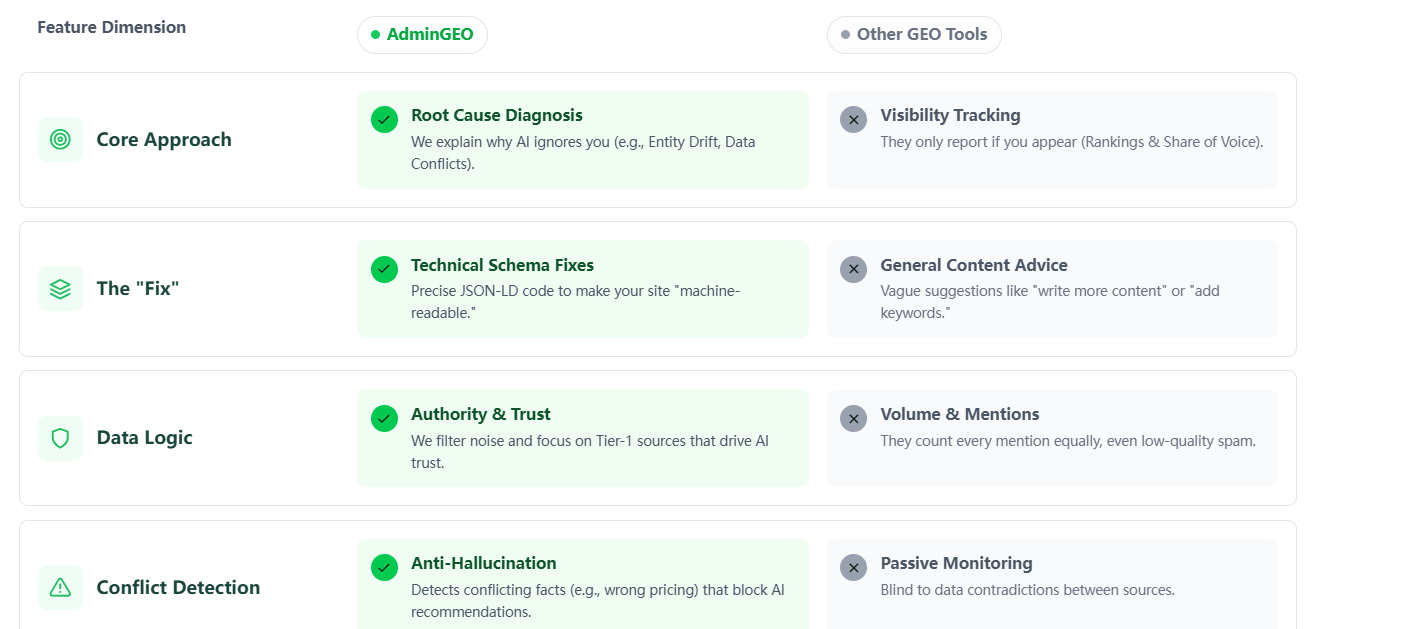
AdminGeoA tool built for GEO optimization. It:Analyzes content structure to see if AI can understand it.Checks if your content is relevant to the topic.Simulates how AI reads your article.Best for: Those wanting a systematic approach to GEO and figuring out what’s wrong with their content.
ClearscopeFocuses on semantic coverage and keyword optimization. While not GEO-specific, it helps you write more comprehensive content.Best for: Writing long-form content and ensuring all key angles are covered.
FraseAn AI-powered writing and research tool. I use it for:Understanding what users are asking.Seeing what top-ranking content covers.Best for: Early-stage research and generating outlines.
Final Thoughts
GEO is still new, and there’s no one-size-fits-all answer. But here are a few trends:
- To get cited, your content must be easy for AI to understand—structure is key.
- Don’t try to trick AI—write genuinely informative content, and it will find you.
- Tools like AdminGeo help, but great content comes from you.